Newsletter 04/2026: Actual situation in international transport

Let’s take a look at the world of logistics in May. With both our holidays and the Chinese holidays behind us, we’re now looking forward to the traditional start of the Christmas season for sea imports from Asia. In air freight, on the other hand, we’re already operating on the so-called summer schedule.
OCEAN TRANSPORT
Container shipping is no stranger to fluctuations and disruptions, so we can say that the situation regarding security and fuel surcharges has stabilized. These charges are simply here to stay for the time being and will only change over time in line with oil price movements and the security situation.
PERSIAN GULF
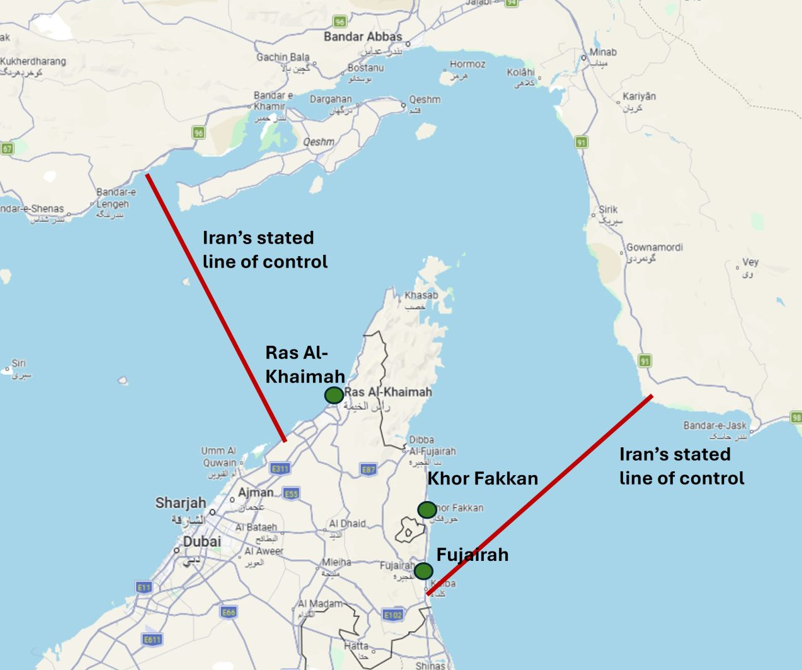
Shipping companies are still looking for ways to serve this region. Options do exist, but they typically involve transport that includes the last—or, from an import perspective, the first—“safe” port (Khor Fakkan) combined with truck transport. However, this is by no means the inexpensive solution that exporters to this region were accustomed to, and compared to more stable times, one must expect an increase of approximately 300%. Furthermore, Iran has recently delineated its area of control over the Strait of Hormuz, which, as you can see on the attached map, includes the port of Khor Fakkan and two other container ports in the United Arab Emirates. We cannot say for certain whether this will shift the safe zone and require trucks to travel an even longer route.
There is the option of avoiding the sea entirely and traveling to the Persian Gulf region by truck through Turkey.
FAR EAST
As we mentioned in our editorial, the latest holidays in China are behind us, and the logistics chain—especially in our direction—is picking up again. This is primarily in anticipation of the Christmas shipping season. Shippers are taking advantage of the holidays and the traditional surge in demand to announce price increases starting in mid-May. We’ll have to wait and see how this plays out, but for now, it seems there is still space on the ships.
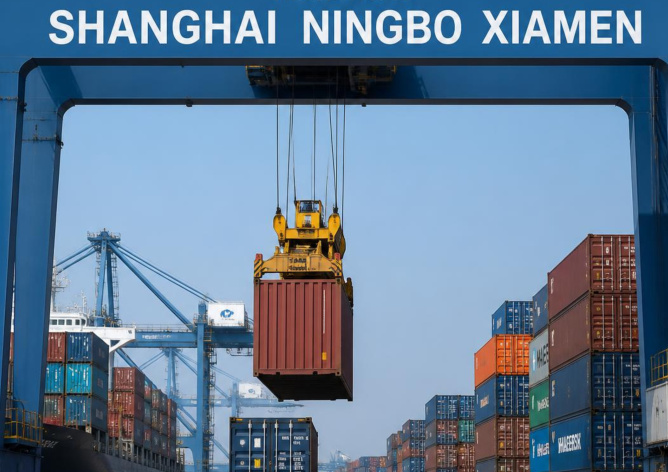
The fast-service vessel, which we occasionally refer to as the Ningbo Express and which is designed to compete with trains in terms of transit time, has successfully arrived. It sails through the Suez Canal, and after departing from Ningbo on April 26, we delivered the ordered goods to a customer in the Czech Republic on May 6. Unfortunately, according to the latest information, the next scheduled ship for May 27 has been suspended for now.
INTERMODAL TRANSPORT
This aspect of transportation is also becoming an increasingly distinct issue. The days when customers viewed the sea with trepidation and the journey to or from the port was the simple, almost routine part are, at least for now, a thing of the past. While ports in northern Germany are managing to keep import and export delays between 2 and 4 days, the journey between the Czech Republic and the ports remains complicated by ongoing repairs.
The port of Gdańsk is the logical route for those who want to avoid this, but the wait for a free slot for intermodal container transport can easily stretch to 14 days. With the aforementioned Christmas season beginning, we likely cannot expect any significant improvement at any of the mentioned ports. What can be done? Either you have an adequately extended lead time, or you want to manage your transport in these respects as well. For the former, we have a classic solution where price is the be-all and end-all. This, of course, comes at the cost of having only one operator to choose from and a route and solution that are practically fixed. For the latter, we have several operators at our disposal, the latest addition being a rail operator from the PSA BDP family for the Port of Gdańsk. At the time of departure, it is very difficult to predict which operator will be available upon arrival. However, a well-structured offer allows you to make an informed decision well in advance of arrival using up-to-date data and to optimize the timing of the journey from the port.
AIR TRANSPORT
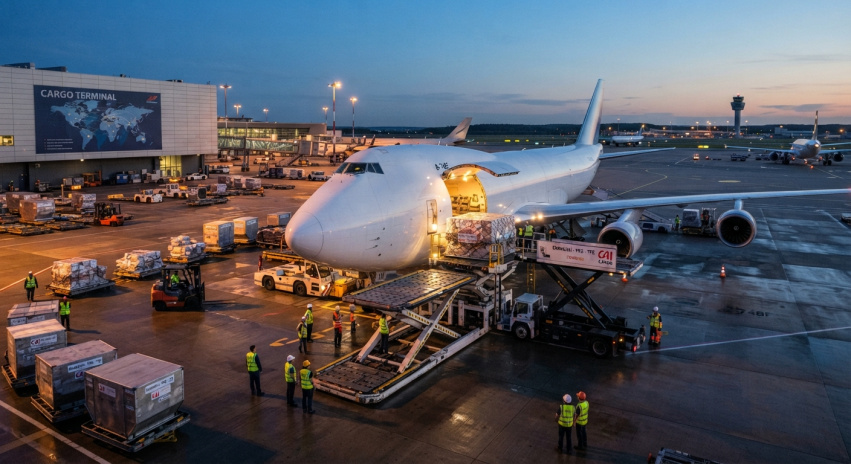
The summer flight schedule is having a positive impact on our capacity and, consequently, on our prices. Air freight rates are, of course, influenced by oil prices; as a result, for example, on import routes from the Far East, air freight rates are currently 20–25% higher than during the same period last year. However, the addition of holiday flights, on the other hand, brings more cargo capacity and thus greater supply. Among the latest additions, let’s at least mention the daily service to New York or, in the coming days, a service with the same frequency to Philadelphia. Despite the situation in the Persian Gulf, airlines are slowly beginning to offer air routes to Dubai, Israel, Riyadh, and Jeddah as well.
TRADE AGREEMENT WITH MERCOSUR
On May 1, the trade agreement between the European Union and the Latin American bloc Mercosur will provisionally enter into force. Negotiations on the agreement lasted over twenty-five years, and the European Commission has decided to exercise its authority to begin implementing the agreement, even though the European Parliament has not yet approved it.
The agreement applies to the Mercosur countries that have completed the ratification process—namely Argentina, Brazil, Uruguay, and Paraguay. The result is the creation of one of the largest free trade zones in the world, covering a market of more than 700 million consumers. For businesses on both sides of the Atlantic, this means the gradual elimination of tariffs and easier access to new markets, the strengthening of supply chains, and more predictable conditions for investment. EU exporters, in particular, will gain a better platform for marketing their products and services in South America. Similarly, South American exporters will find it easier to enter the single European market.