The Middle East – Actual situation – update
Dear partners, allow us to inform you about the current developments in the Middle East, with particular regard to maritime transport.
OCEAN TRANSPORT AND GRI DECLARATIONS
Over the weekend of February 28, 2026, the United States and Israel attacked Iran, killing its supreme leader and triggering a military conflict that is still ongoing and whose duration is unclear.
We informed you about the initial difficulties in the region with regard to supply chains in Monday's newsletter.
Unfortunately, it has been confirmed that this conflict is also having a negative impact on other maritime routes (we are most affected by connections between the Far East and the Indian subcontinent with Europe).
This is the so-called domino effect, which we have already experienced several times in the last turbulent decade.
This refers in particular to the introduction of various possible and impossible surcharges (PSS, GRI, TDS, WRS, ECS, etc.), because this crisis will result in a global disruption of supply chains, a shortage of empty containers in individual regions (especially in the Far East), overcrowding of individual ports, as all shipments to the Persian Gulf have been halted and loaded containers have remained in these ports, and other possible complications. It is therefore necessary to expect additional price increases, even for valid price contracts with longer validity periods.
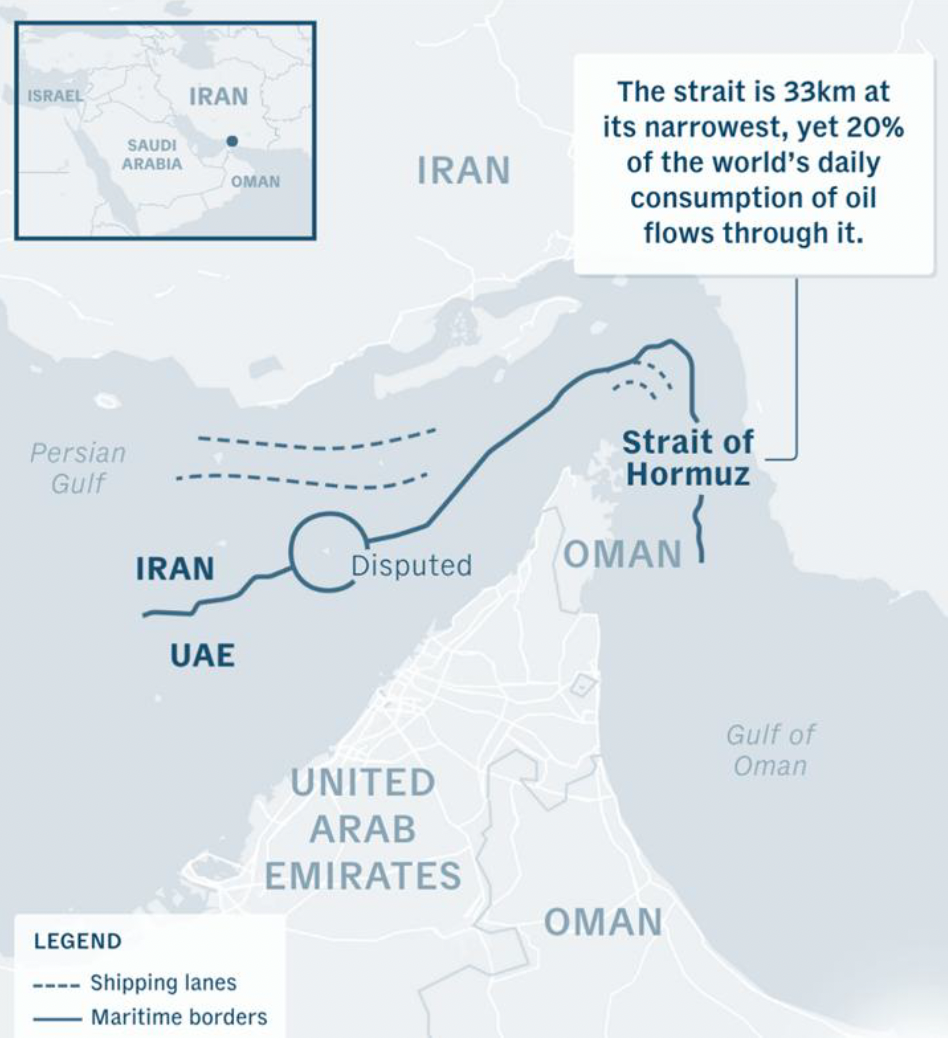
The Strait of Hormuz is an important narrow sea route (more than 160 km long and 33 km wide at its narrowest point) connecting the Persian Gulf with the Gulf of Oman and the Arabian Sea.
Located between Iran and Oman, it is the most important oil hub in the world. Approximately 20-25% of global oil and LNG consumption passes through it every day.
The shipping corridors are narrow (only 2 miles wide in each direction), making it a strategic and military point.
Currently, 150 container ships are stuck in the Strait of Hormuz, and while there have been moments in history when the strait was unsafe or threatened with closure, it has never been completely shut down. This officially happened yesterday, March 3, when Iran officially announced the closure of the Strait of Hormuz.
These capacities and containers will be lacking on the market.
The effect of the closure is very rapid, and the price of oil has skyrocketed, affecting the entire global market, including Asian countries, which are heavily dependent on oil exports from the Persian Gulf via the strait.
Apart from road freight transport from the ports of Saudi Arabia or Oman, there are few maritime transport options to the Strait of Hormuz.
We can therefore expect impacts on transshipment hubs such as Colombo, Tanjung Pelepas, and Singapore, as well as spillover to Fujairah (UAE) and Sohar (Oman).
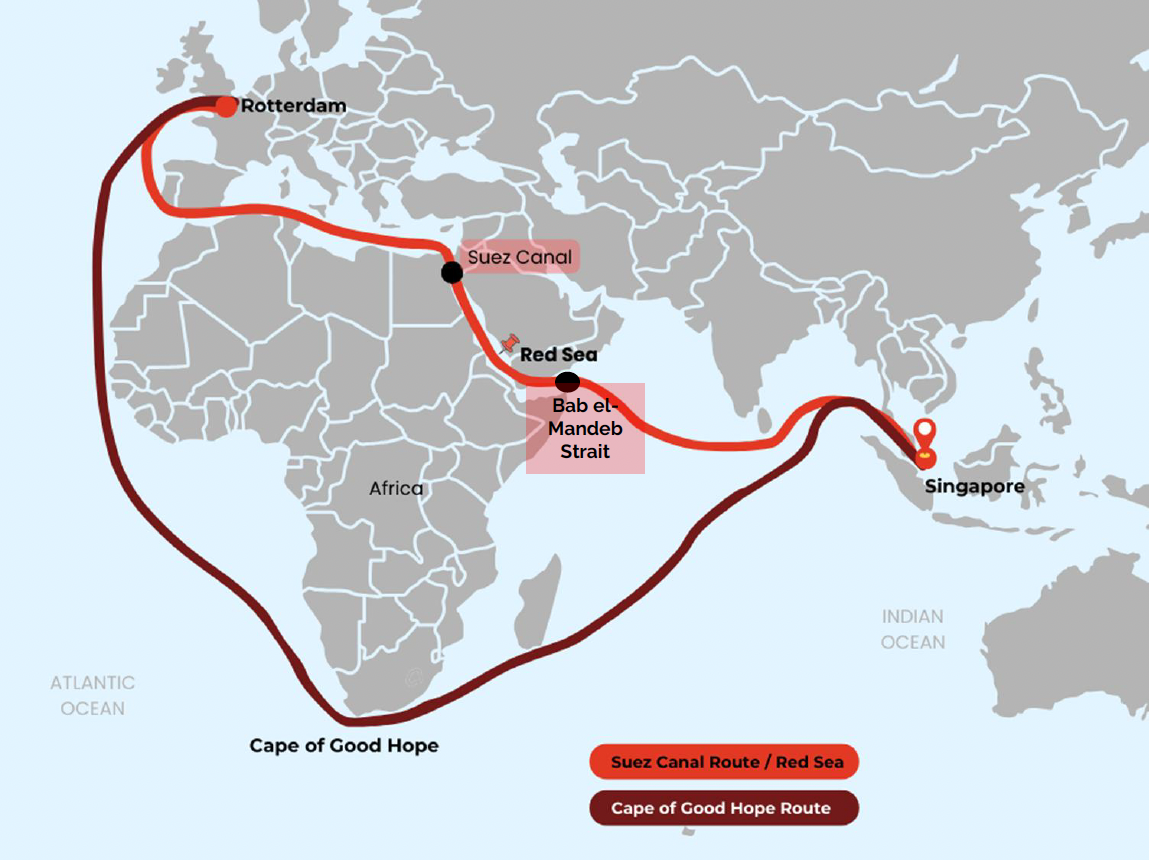
Most shipping companies also report that the return to Suez is over and that their services will return to sailing around Africa and the Cape of Good Hope. With the acceleration of maritime transport, we can say goodbye to low prices for the time being. No one can predict how long this will last. The only certainties are that the market remains volatile and unpredictable due to the current global situation and that we will continue to keep you informed of developments.
Other articles

Newsletter 08/2026: New Packaging Requirements: Everything You Need to Know About the PPWR
With the summer months still in full swing, some of you may think of other summer activities (such as packing a suitcase) when the word “packaging” comes up, but for our newsletter and for you, our readers and customers, what matters is the packaging of goods and packaging in general. What have lawmakers in store for us in this regard?
Extraordinary Newsletter 07/2026: Typhoon Saudel—Suspension of Port Operations in China
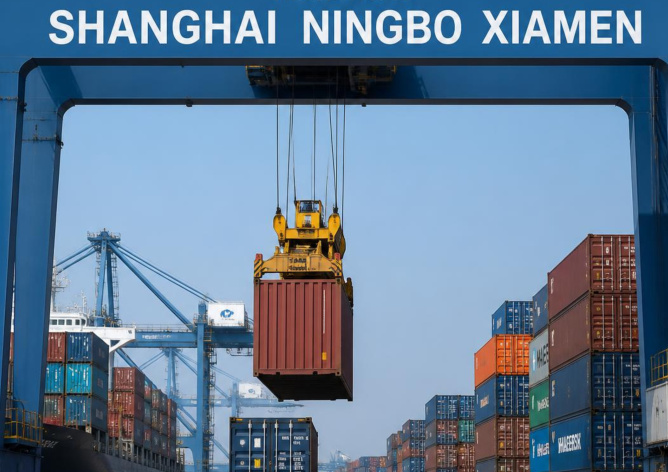
It is our regret to inform you that, as a result of the new typhoon Saudel, operations at the ports of Shanghai and Ningbo have been suspended as of this afternoon. The port of Xiamen is also expected to be affected. Consequently, there will be corresponding delays in the ships’ schedules.
Newsletter 06/2026: Actual Situation in International Transport
Summer has begun, and with it the vacation season, but there’s certainly no time to rest in international logistics. It wasn’t just hot outside—it was also heating up at sea, particularly in terms of prices. July brought several major legislative and market changes that are significantly reshaping the landscape for all types of transportation. Let’s take a look at them.