Newsletter 06/2026: Actual Situation in International Transport
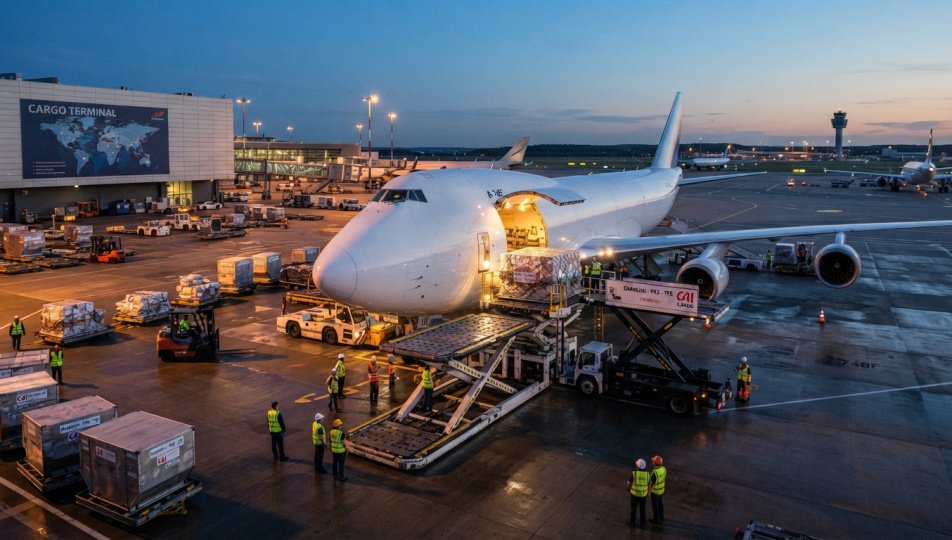
Summer has begun, and with it the vacation season, but there’s certainly no time to rest in international logistics. It wasn’t just hot outside—it was also heating up at sea, particularly in terms of prices. July brought several major legislative and market changes that are significantly reshaping the landscape for all types of transportation. Let’s take a look at them.
ROAD TRANSPORT:
Is this the end of fast shipping for small packages?
On the roads, we’re seeing the traditional summer factor: drivers taking vacations and the resulting reduction in available capacity. It’s a good idea to keep this in mind when planning road transport.
But what’s absolutely crucial this year is the legislative revolution in express transport.
As of July 1, 2026, a new European regulation (based on the Mobility Package) came into effect, extending the requirement to have a second-generation smart tachograph (G2v2) to light commercial vehicles weighing between 2.5 and 3.5 metric tons engaged in international transport.
What does this mean in practice?
The end of one-day express deliveries: Gone are the days when a van could reach the UK or Spain in less than 24 hours of non-stop driving. Van drivers must now strictly adhere to the same mandatory breaks and rest periods as truck drivers. Transit times for long routes are naturally increasing as a result; traveling by van is no longer cost-effective, and the costs are shifting to trucks.
At the same time, some carriers were unable to install the new, expensive equipment or obtain driver cards in time, and their vehicles are now prohibited from crossing borders. This, too, is affecting supply, which is lower.
Please note that this may also affect long-term rate schedules, which were calculated specifically for smaller volumes and fast transit times.

AIR TRANSPORT:
E-commerce and the United Kingdom
The air freight market is currently showing some interesting anomalies, as well as the traditional differences between imports and exports.
Imports:
China: Although rates are still higher than they were at this time last year, we are currently seeing a slight decline, due in part to a decrease in e-commerce volumes. This decline is primarily due to a new flat-rate duty of 3 EUR on low-value shipments of up to 150 EUR imported from non-EU countries (primarily targeting platforms such as Temu, Shein, and AliExpress), which the European Union introduced on July 1, 2026. Only time will tell whether this will help level the playing field and free up capacity for standard commercial cargo (B2B).
Taiwan: Here, on the other hand, growth has not slowed. The outlook indicates that rates will remain firm.
United Kingdom: Due to the situation on the roads (see delivery restrictions), demand for urgent shipments is shifting to air freight to and from the United Kingdom. However, we are running into technical limitations here. Flights between the United Kingdom and the Czech Republic primarily use so-called narrow-body aircraft. The maximum shipment dimensions here are more strictly limited to 1.5 × 1.5 × 1.0–1.1 m (compared to the standard 1.6 m). Bulkier goods must be handled via services involving transshipment, and a turnaround time of 2–3 days should be expected.
Exports:
As the saying goes, “Mother of Wisdom,” attractive rates for exports to the Far East remain in effect due to the trade imbalance. The U.S. market is generally 30–35% higher than usual, though some rates are still quite appealing. On the other hand, capacity is sufficient for flights to Dubai, where, as we previously reported, airlines have resumed stable service directly from Prague. The same is true for Tel Aviv, though charter flights currently dominate that route.
RAIL TRANSPORT
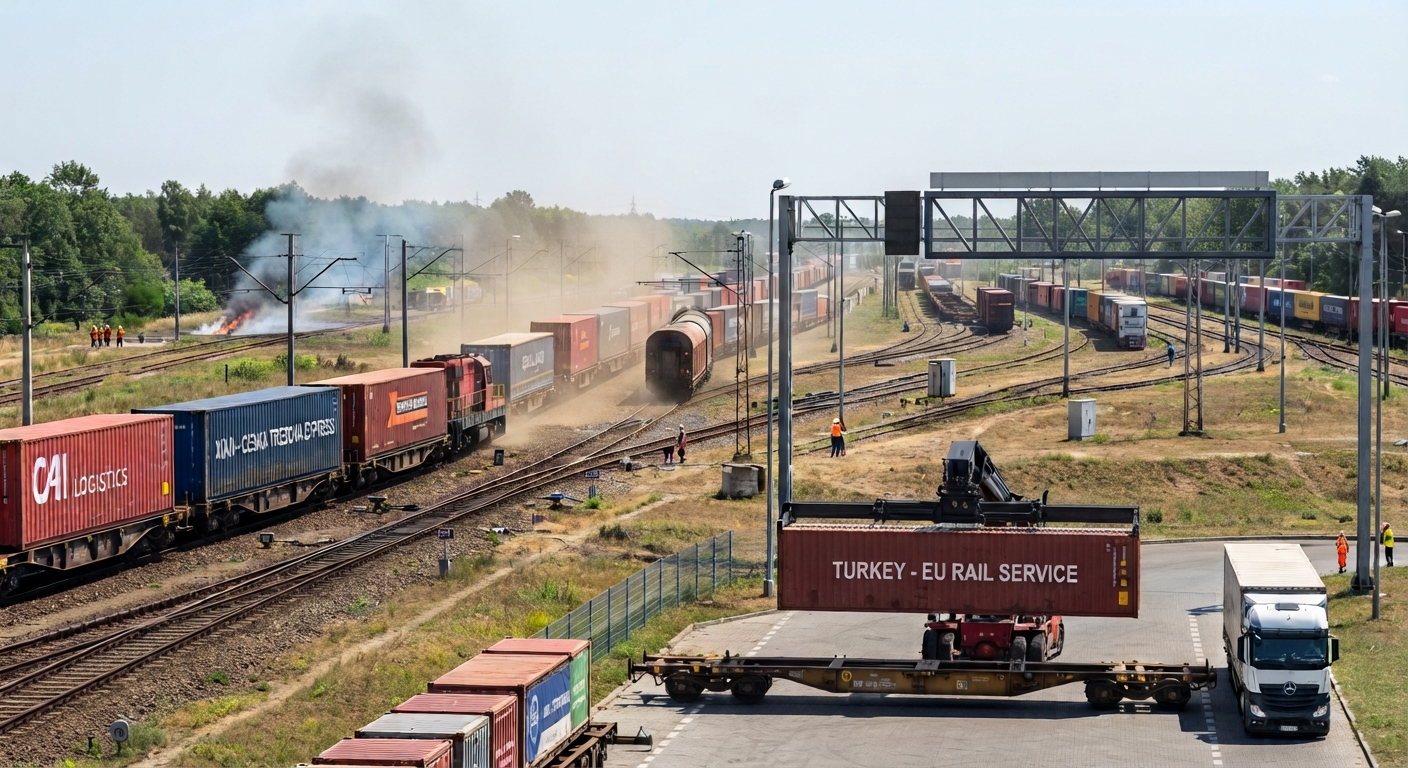
We are seeing a slight drop in prices for imports from the Far East. Containers are generally departing on time, capacity is available, and border crossings between China and Kazakhstan are now operating more efficiently and smoothly. However, the problem has shifted closer to us, and trains are currently experiencing delays in Malaszewicze, Poland. According to available information, this is due to extreme heat and fires affecting the railway infrastructure.
While trains from Xi’an are running without significant issues in a good and mostly stable timeframe of 19–20 days (Xi’an / Česká Třebová), other services are experiencing delays of 7 to 10 days. We therefore recommend our service via the more reliable Xi’an route, where we believe we can avoid delays and potential additional costs, which are never welcome in rail transport.
Rail service to and from Turkey is performing well, and in recent weeks we have recorded numerous train departures, with up to four departures per week in both directions. Truck capacity is available, which means this intermodal service offers a shorter delay between loading and actual departure from the terminals, resulting in a faster overall door-to-door transit time.
OCEAN TRANSPORT
Imports
Exports (U.S. & Mexico)
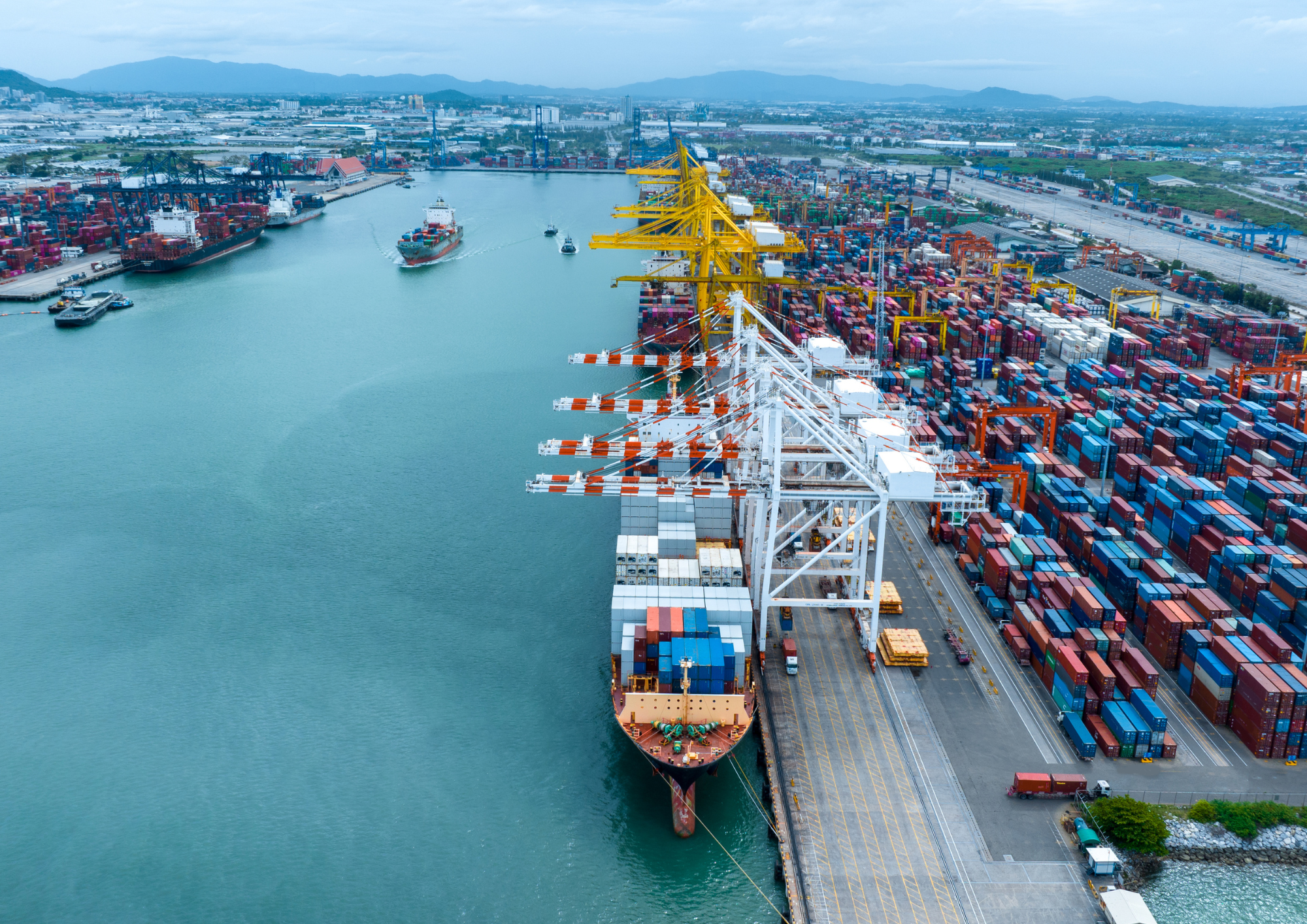
The shortage of space on ships bound for the U.S. East Coast persists. On average, the wait for a booking is as long as 3 weeks. The situation is worst in Houston, where available capacity is currently limited to mid-August.
Intermodal Transport
Unfortunately, problems with inland container transport continue. Overcrowded terminals and a lack of capacity mean that pickup times are still 2–3 weeks, and even longer for some carrier-operated services. Supply chains must continue to strictly factor in these delays. With the Christmas season approaching and ships arriving from the Far East, combined with extreme weather fluctuations and planned service interruptions due to repairs, there is no reason for optimism in this regard. You can usually find the latest information in the News section of eSTONE.
We wish all our readers a pleasant summer.
Other articles

Newsletter 08/2026: New Packaging Requirements: Everything You Need to Know About the PPWR
With the summer months still in full swing, some of you may think of other summer activities (such as packing a suitcase) when the word “packaging” comes up, but for our newsletter and for you, our readers and customers, what matters is the packaging of goods and packaging in general. What have lawmakers in store for us in this regard?
Extraordinary Newsletter 07/2026: Typhoon Saudel—Suspension of Port Operations in China
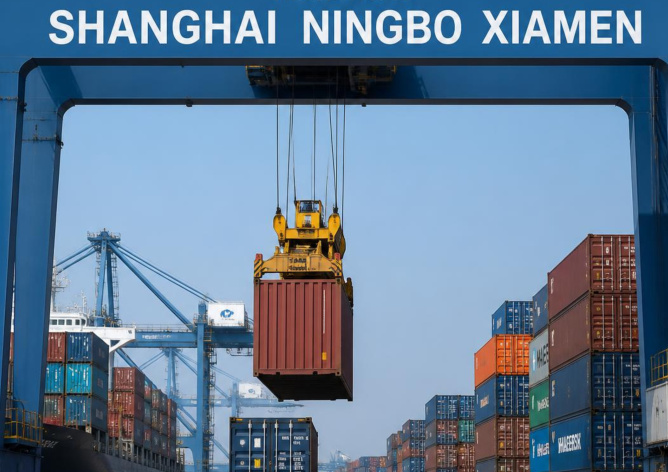
It is our regret to inform you that, as a result of the new typhoon Saudel, operations at the ports of Shanghai and Ningbo have been suspended as of this afternoon. The port of Xiamen is also expected to be affected. Consequently, there will be corresponding delays in the ships’ schedules.
Newsletter 05/2026: Actual situation in international transport
June brings hot days not only outside our windows, but also in the world of logistics. At least in the field of ocean freight from the Far East, the Christmas season—which we mentioned in our last newsletter—is now in full swing, along with the associated battle for space. On top of that, shipping lines are stoking the fire of price competition.