Newsletter 08/2026: New Packaging Requirements: Everything You Need to Know About the PPWR

With the summer months still in full swing, some of you may think of other summer activities (such as packing a suitcase) when the word “packaging” comes up, but for our newsletter and for you, our readers and customers, what matters is the packaging of goods and packaging in general. What have lawmakers in store for us in this regard?
Packaging and Packaging Waste Regulation (PPWR)
1. Service packaging:
2. Shipping packaging:
3. Primary packaging:
These are packaging materials for unprocessed primary-production products and include, for example, potato sacks or apple crates. Essentially, the same principles apply to them as we mentioned regarding shipping containers.

What should you prepare for and what will actually change for you?
- Two mandatory documents for packaging: For each type of transport packaging that you place on the market or import, you must have Technical Documentation prepared (in accordance with Annex VII of the Regulation) and an EU Declaration of Conformity issued (in accordance with Annex VIII of the Regulation).
- What should the analysis and documentation look like? You certainly don’t need to worry about having to send every piece of plastic film or cardboard to a lab for a complete chemical analysis of all substances. The documentation is based on declarations. All you need is confirmation and data sheets from your supplier (manufacturer) stating that the packaging meets the specified limits—for example, that the total content of heavy metals (lead, cadmium, mercury, hexavalent chromium) does not exceed 100 mg/kg and that the packaging does not contain any prohibited hazardous substances.
- Is there a template for this? The structure of the EU Declaration of Conformity is specified in Annex VIII of the PPWR Regulation, and a simplified template in Czech is available for free download on the Ekokom website:
https://www.ekokom.cz/wp-content/uploads/2026/08/Vzor_Prohlaseni_o_shode_CZ.pdf - You must maintain your own records in your internal systems. You must archive the technical documentation and the issued Declarations of Conformity for 5 years for single-use packaging and 10 years for reusable packaging.
Who will monitor this and how?
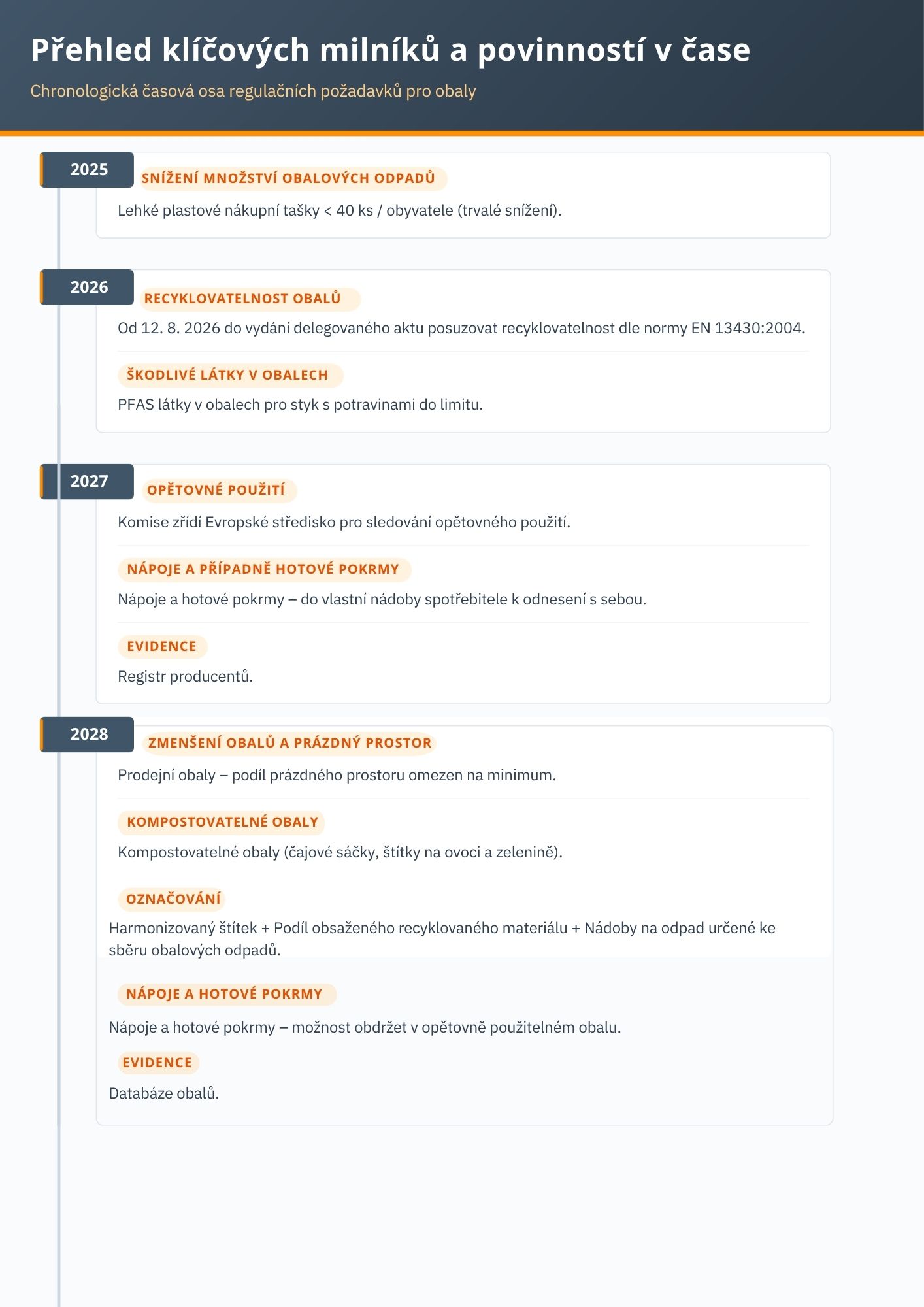
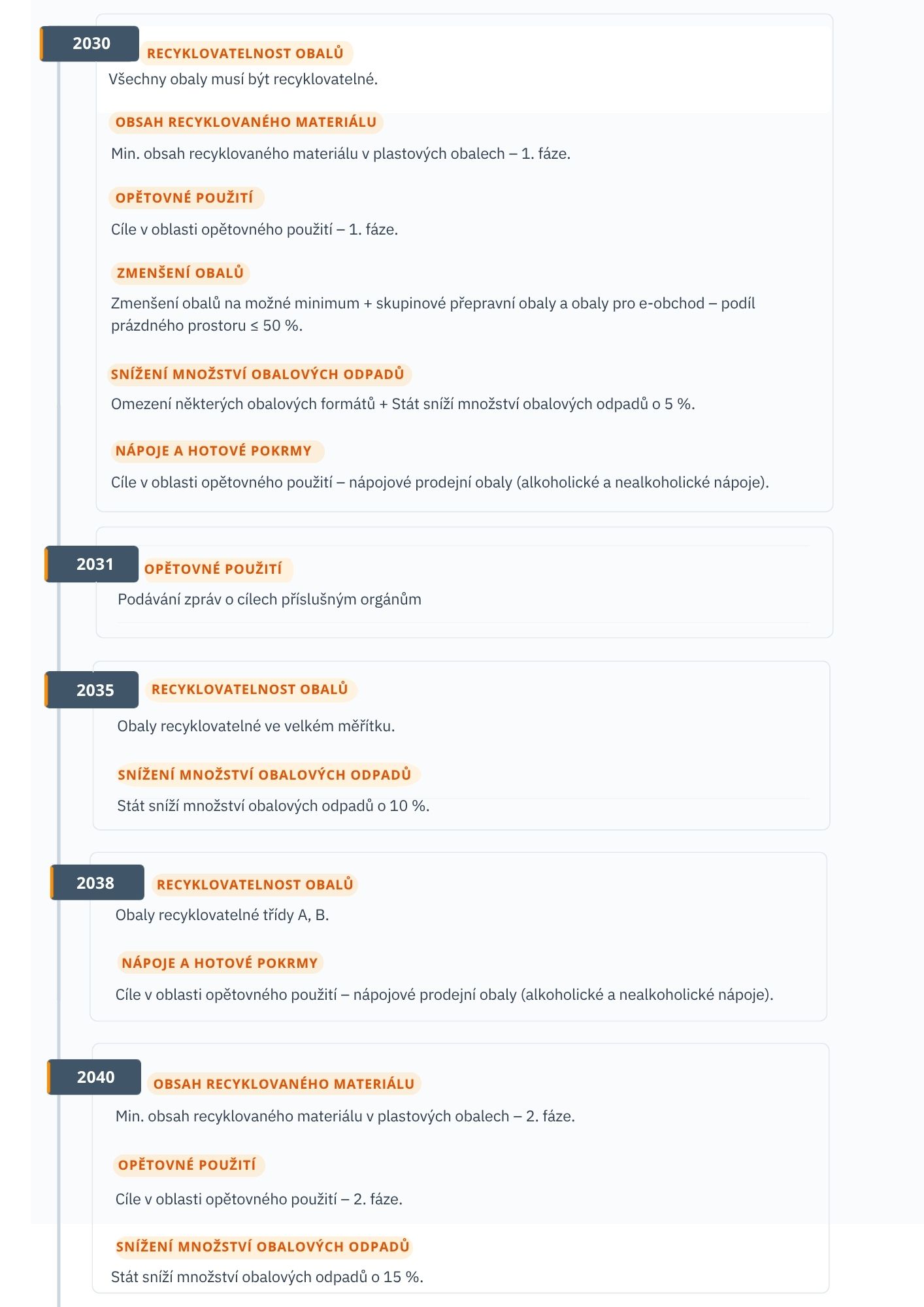
What else lies ahead for us?
From the perspective of European plans, the August requirements are really just a kind of administrative warm-up. The European Union is rolling out stricter requirements gradually, and we recommend keeping an eye on the upcoming milestones of this initiative:
|
If you have any questions, please contact your sales representative or Ekokom directly, which provides a detailed overview of the regulation on its website.
|
Other articles
Extraordinary Newsletter 07/2026: Typhoon Saudel—Suspension of Port Operations in China
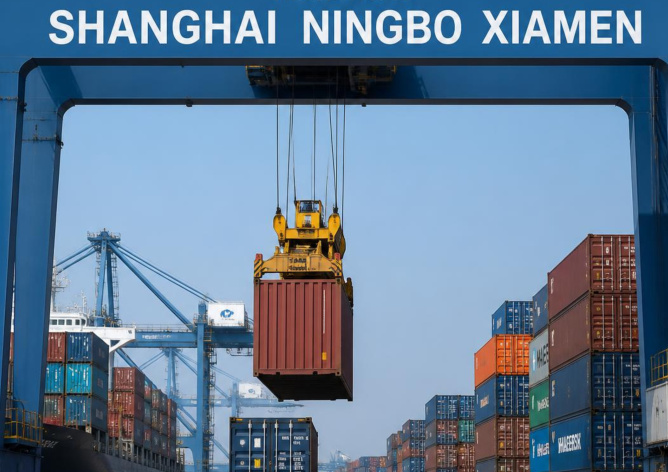
It is our regret to inform you that, as a result of the new typhoon Saudel, operations at the ports of Shanghai and Ningbo have been suspended as of this afternoon. The port of Xiamen is also expected to be affected. Consequently, there will be corresponding delays in the ships’ schedules.

Newsletter 06/2026: Actual Situation in International Transport
Summer has begun, and with it the vacation season, but there’s certainly no time to rest in international logistics. It wasn’t just hot outside—it was also heating up at sea, particularly in terms of prices. July brought several major legislative and market changes that are significantly reshaping the landscape for all types of transportation. Let’s take a look at them.

Newsletter 05/2026: Actual situation in international transport
June brings hot days not only outside our windows, but also in the world of logistics. At least in the field of ocean freight from the Far East, the Christmas season—which we mentioned in our last newsletter—is now in full swing, along with the associated battle for space. On top of that, shipping lines are stoking the fire of price competition.